
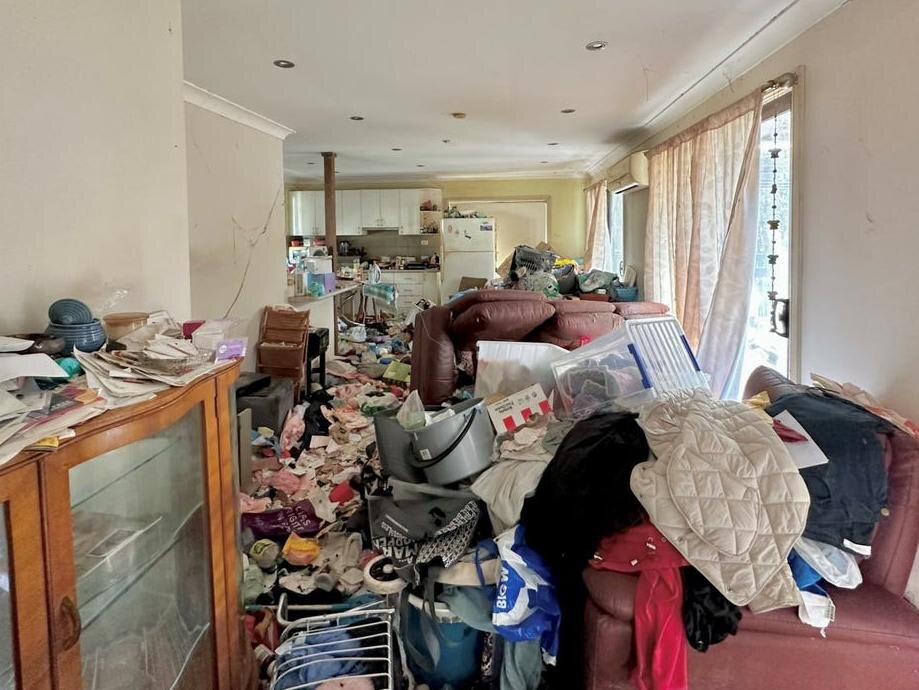
If you’re reading this, you may be looking at a house you can barely walk through. Maybe it belongs to a parent who needs to move to assisted living. Maybe it’s a relative’s home you inherited. Maybe it’s your own, and things got away from you. Whatever the reason, the same thought is probably running through your head: how on earth do I sell this?
Take a breath. You can sell a house full of belongings, and you don’t have to clean it first. We’ve bought houses in Lancaster, Lititz, Ephrata, Manheim, and across the county in every state of clutter, and nobody walks in judging. Here’s how it works and what your options are.
Not sure where to start? Get a no-obligation cash offer → or call (717) 715-0010. We’ll take it from here.
First, You’re Not the Only One
Hoarding is more common than most people think. It’s recognized as a mental health condition, called hoarding disorder, and it’s marked by a lasting difficulty letting go of possessions, whatever their value. Estimates vary, but studies put it somewhere in the range of 2% to 6% of adults. It often shows up alongside depression, anxiety, or other health challenges, and it frequently becomes more serious with age.
That matters because a hoarded home is rarely about laziness or neglect. Often it’s about grief, health, isolation, or an illness that makes it hard to let things go. If this is your parent or loved one, patience and compassion help far more than pressure. If it’s you, there’s no shame in it, and there is help.
Why Selling a Hoarder House Is So Hard the Traditional Way
Listing a heavily cluttered house with an agent runs into trouble right away:
- Buyers can’t see the house. Photos and showings need clear rooms, floors, and walls.
- Inspections and appraisals stall. Inspectors can’t reach electrical panels, water heaters, attics, or crawl spaces if they’re blocked.
- Hidden damage is common. Years of clutter can hide leaks, mold, pest problems, and structural issues.
- Lenders may balk. A home that doesn’t meet minimum safety and habitability standards can be hard to finance.
- The cleanout is a huge project. Someone has to sort, haul, and dispose of everything before the house is market-ready, often at significant cost.
Because of all that, many families end up stuck for months, not knowing whether to start cleaning or start calling.
What a Hoarder House Cleanout Actually Costs
Costs depend on how much is in the home, how hard it is to reach, and whether there are sanitation problems. Prices vary quite a bit from company to company, so treat these as rough ranges:
- Professional cleaners commonly charge about $25 to $100 per hour per person
- Whole-house cleanouts are often quoted somewhere around $1 to $2 per square foot, or roughly $1,000 to $4,000 for moderate situations
- Haul-away by the truckload often runs several hundred dollars per load
- Severe cases with pests, rotting materials, or biohazards can run well into five figures and take weeks
And that’s before repairs. Once the clutter is gone, you may find damaged flooring, wet or moldy drywall, pest damage, or failing systems that were hidden for years. Cleaning out a house is often just step one.
Don’t want to take on a cleanout? Call (717) 715-0010 — we buy houses with everything still inside.
The Hidden Risks Inside a Cluttered House
Even when a home looks “just messy,” clutter can hide real hazards. Knowing what to look for helps you decide how much to take on yourself.
- Fire risk. Piles near heaters, stoves, or electrical outlets, and blocked exits, are among the most serious concerns.
- Structural strain. Heavy stacks of paper or belongings can overload floors, especially in older Lancaster County homes with original framing.
- Moisture and mold. Clutter traps humidity and hides slow leaks, which is a common path to mold.
- Pests. Rodents, insects, and the damage they cause often go unnoticed under piles of belongings.
- Sanitation. Spoiled food, pet waste, or standing water can create health hazards that need professional cleanup.
- Hard-to-reach systems. Furnaces, water heaters, and electrical panels may be blocked, which hides problems and makes emergency repairs harder.
If you see signs of any of these, treat the cleanout as a safety job, not just a tidy-up. Wear gloves and a proper mask, and consider hiring professionals for anything involving mold, pests, or biohazards.
How to Talk With a Loved One About Selling
If the home belongs to a parent or relative who’s still living, the conversation matters as much as the logistics. People who struggle to part with belongings often feel judged, and pressure tends to make things worse.
A few approaches that help families:
- Lead with their goals, not the mess. Focus on what they want, such as moving somewhere safer, being near family, or having less stress.
- Go slowly and decide together. Let them make as many choices as possible, even small ones.
- Don’t throw things away behind their back. It can break trust and set the process back.
- Bring in a neutral third party. A doctor, social worker, or counselor sometimes gets further than family does.
- Ask about legal planning. If the person can no longer manage their affairs, a Pennsylvania elder law attorney can explain options like power of attorney.
Patience here pays off. Families who take the time to involve their loved one often find the sale goes more smoothly, and the relationship comes through it intact.
When Code Enforcement Gets Involved
Sometimes the decision about what to do isn’t entirely yours. When a home becomes a safety or health risk, local code enforcement can step in. That can happen if there are fire hazards, blocked exits, sanitation problems, pests, or structural concerns, and sometimes it starts with a neighbor’s complaint.
If violations are found, the owner is usually given a deadline to correct them. The timeline depends on the hazard, and emergency issues can require much faster action. Fines can follow if the work isn’t done, and in serious cases a property can be declared unfit for occupancy.
If you’ve received a notice, read it carefully, note the deadline, and call the number on it. Ignoring it only makes things harder. And if a deadline is approaching, a fast as-is sale can sometimes take the pressure off, since we deal with the property after the sale.
Your Options
Do the cleanout yourself or with family. This works if the situation is manageable and you have time, help, and emotional energy. It’s often slower and harder than people expect, especially if the person who owns the belongings has trouble letting go.
Hire professionals, then list. A specialized cleanout and hoarding cleanup service can handle the work, and then you can list the house traditionally. This can maximize your sale price, but it takes money and time up front, and repairs may follow.
Sell as-is to a cash buyer. You skip the cleanout, the repairs, and the showings. You take what you want to keep, and the buyer handles the rest after closing.
What a Cash Sale Looks Like for a Hoarder House
We buy houses across Lancaster County exactly as they are, with the contents still inside. Here’s how it typically goes:
- You contact us, and we schedule a visit at a time that works for you. We’re respectful, and we’ve seen it all.
- We look at the house and make a fair offer based on its condition as-is.
- If you accept, you choose the closing date, in as little as 7 to 14 days, or later if you need time.
- Before closing, you take family keepsakes, important papers, photos, and anything you want to keep. Everything else can stay.
- After closing, we handle the cleanout and disposal at no extra cost to you.
There are no commissions, no closing costs on your end, no repairs, and no obligation. If a family needs to move a parent out of the home, or an estate needs to be settled quickly, that kind of certainty can take a huge weight off.
Tips for Handling This With Care
Whether you’re clearing the house or selling it as-is, a few things can make it easier on everyone:
- Look for important items first. Birth certificates, deeds, wills, insurance papers, jewelry, cash, and family photos can be buried anywhere. Set aside time to check closets, drawers, and boxes before closing.
- Respect the person’s feelings. If the owner is still alive and involved, push too hard and they may shut down. Involve them in the decisions where you can.
- Think about support. Hoarding disorder is treatable, usually with a type of therapy. The International OCD Foundation has resources at hoarding.iocdf.org that can point families toward help.
- Don’t do it alone. Bring in a trusted friend, relative, or professional so you’re not carrying the whole load.
- Mind safety. Heavy dust, mold, pests, and unstable piles can be hazardous. Wear protection, and don’t try to move heavy or precarious items alone.
Common Situations We See in Lancaster County
Across Lancaster, Lititz, Columbia, Mount Joy, Willow Street, and the surrounding townships, hoarder-house sales tend to come up in a few ways:
- Adult children handling a parent’s house after a move to assisted living or a death
- An inherited home that sat for years with a lifetime of belongings inside
- An owner dealing with health issues who can no longer keep up with the house
- A property facing code violations or a deadline from the municipality
- Families who started a cleanout and couldn’t finish
If you see yourself here, you aren’t doing anything wrong. This is a hard situation, and there’s a way through.
Many of these families tell us the same thing afterward: the sale itself was the easy part. What took the weight off was knowing someone would handle the house without making them feel embarrassed about it.
Frequently Asked Questions
Do I have to clean out a hoarder house before selling? No. If you sell to a cash buyer like us, you can leave unwanted items in the house. Take what you want to keep, and we handle the rest after closing.
Can I sell a house that has code violations because of clutter? Often yes. Selling as-is can be a way to resolve the situation, though you should address any official deadlines and check your notice. Talk with us or an attorney if you’re facing a hard date.
How much does hoarder house cleanup cost? It varies a lot. Moderate cleanouts often run roughly $1,000 to $4,000, while severe cases can reach five figures once repairs and sanitation work are included.
What if the owner doesn’t want to sell? That’s a delicate situation. If the owner is competent, the decision is theirs. If they’re not able to make decisions, a family may need legal help, such as power of attorney or guardianship, before a sale can move forward. A Pennsylvania elder law attorney can advise you.
Will you judge the condition of the house? No. We’ve bought homes in every condition. Our job is to make a fair offer and make the process easy.
Bottom Line
A hoarder house can feel impossible to deal with, but it can be sold. You can clean it out and list it, hire help, or sell as-is to a buyer who takes everything on after closing. The right choice depends on your time, budget, and emotional energy.
If you have a house in Lancaster County, whether that’s Lititz, Ephrata, Manheim, Columbia, Quarryville, Millersville, or nearby, we’re happy to talk it through. No pressure, no judgment, and no obligation.
Get Your Free, No-Obligation Cash Offer → Or call (717) 715-0010. We’ll respond within 24 hours.