
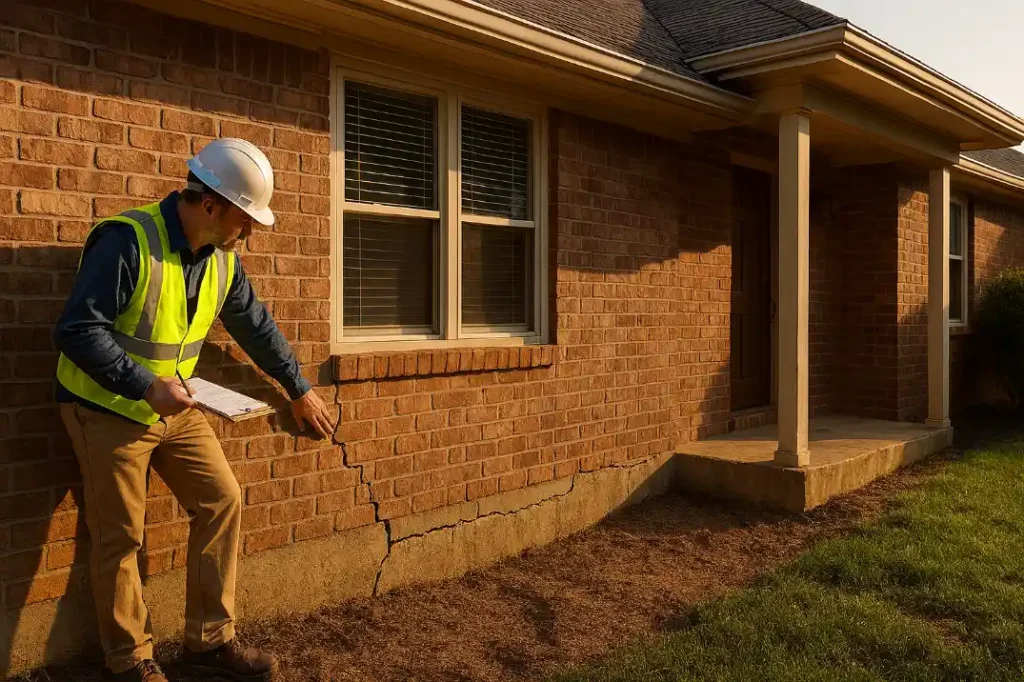
A crack in the basement wall. A door that suddenly won’t close right. A floor that’s just a little more uneven than it used to be. Foundation problems rarely show up all at once — they creep in, and by the time you’re thinking about selling, they can feel like the one thing standing between you and a normal sale.
Here’s the good news: foundation problems don’t have to stop you from selling your house. They do change how you sell it, though, and what Pennsylvania law requires you to tell a buyer about it. We work with homeowners across Lancaster, Lititz, Manheim, and the surrounding county who are dealing with exactly this, so here’s what you actually need to know.
Not sure what your options are? Get a no-obligation cash offer → or call (717) 715-0010.
Do You Have to Disclose Foundation Problems in Pennsylvania?
Yes. Pennsylvania’s Real Estate Seller Disclosure Law requires anyone selling residential real estate to disclose known material defects to the buyer in writing, before the buyer signs the agreement of sale. A material defect is anything that could significantly affect the property’s value or create an unreasonable safety risk — and foundation and structural problems are specifically called out on the standard disclosure form.
That means if you know about cracking, shifting, settling, or past water intrusion around the foundation, you’re required to disclose it — even if it’s not something a buyer would notice on a casual walkthrough. This applies whether you list traditionally or sell directly. The disclosure requirement doesn’t disappear just because you’re selling as-is; it just means the buyer is agreeing to purchase with full knowledge of the issue, rather than finding out later.
Trying to hide a known foundation problem doesn’t just risk the sale falling apart — it can expose you to legal liability well after closing if the buyer later proves you knew and didn’t disclose it.
What Actually Counts as a “Foundation Problem”?
Foundation issues show up in a lot of different ways, and homeowners often don’t connect the dots until an inspector points it out. Common signs include:
- Cracks in basement or foundation walls, especially horizontal or stair-step cracks
- Doors or windows that stick, won’t latch, or have visibly uneven gaps
- Sloping, bouncy, or noticeably uneven floors
- Gaps between walls and ceilings, or walls and floors
- Water intrusion or dampness around the foundation after rain
- Visible bowing or leaning in basement walls
- Chimneys or porches pulling away from the main structure
Some of these are cosmetic and cheap to address. Others point to real structural movement that gets more expensive the longer it goes unaddressed. Either way, once you’re aware of it, it’s something you’re required to disclose.
What Foundation Repairs Actually Cost
This is usually where the decision gets made. Foundation repair costs vary widely depending on severity:
- Minor crack repair: roughly $250 to $800 per crack for smaller, non-structural cracks
- Larger or structural cracks: $1,000 to $5,000 or more per crack
- Underpinning (stabilizing a settling foundation): $1,000 to $3,000 per pier, with full projects often running $2,000 to $30,000+ depending on severity and soil conditions
- Full basement foundation repair: commonly $2,500 to $25,000, since basement-level issues tend to be the most involved and expensive to fix
Nationally, the average foundation repair project runs somewhere in the $5,000 to $12,000 range, but severe structural work can climb well beyond that. And repair cost is only part of the equation — most foundation work also requires a structural engineer’s evaluation first, which adds time and cost before any actual repair even begins.
Not looking to spend thousands on repairs before selling? Call (717) 715-0010 — we buy houses with foundation issues as-is.
Why Foundation Issues Scare Off Traditional Buyers
Even if a buyer falls in love with your house, foundation problems create real friction in a traditional sale:
- Financed buyers often can’t get approved. Conventional, FHA, and VA loans typically require the property to meet minimum structural standards, and a lender’s appraiser flagging foundation issues can stall or kill financing entirely.
- Inspections almost always catch it. A home inspector who spots foundation concerns will typically recommend a structural engineer’s evaluation, which can add weeks to the process and give the buyer leverage to renegotiate or walk.
- Buyers ask for repairs or a credit — sometimes both. It’s common for a buyer to request the seller either complete the repair before closing or provide a credit large enough to cover it, on top of whatever price was already negotiated.
- The pool of interested buyers shrinks. Many traditional buyers, especially first-time buyers relying on FHA financing, simply move on rather than deal with a foundation issue at all.
None of this means your house can’t sell. It means a traditional sale gets more complicated, takes longer, and often costs more out of pocket than sellers expect going in.
Your Options If Your House Has Foundation Problems
Fix it, then list. If you have the cash and time, repairing the issue before listing can open up the full buyer pool and support a stronger asking price. This makes the most sense when the repair is moderate and you’re not in a hurry.
List as-is with a price adjustment. You can disclose the issue, price the home accordingly, and target buyers or investors who are comfortable taking it on. This still requires full legal disclosure and often means a longer time on market and more negotiation.
Sell directly to a cash buyer, as-is. This skips the repair, the structural engineer report, the financing contingency risk, and the back-and-forth entirely. You still disclose what you know, but the buyer is evaluating and pricing the property with the condition already factored in — no repair required on your end.
Why Many Lancaster County Homeowners Choose to Sell As-Is
For a lot of sellers, the math is simple: spending $10,000 or more on foundation repairs, plus the cost of a structural engineer, plus months of uncertainty waiting for a financed buyer’s loan to clear, doesn’t always make sense — especially if you’re also managing an inherited property, a relocation, or another stressful situation at the same time.
We buy houses across Lancaster County exactly as they are, foundation issues included — no repairs, no structural engineer reports to arrange, no financing contingencies to worry about, and no commissions. We can typically close in as little as 7 to 14 days. There’s no obligation to accept an offer, and no cost to find out what your house is worth to us as-is.
Common Situations We See With Foundation Problems in Lancaster County
Across Lancaster, Lititz, Ephrata, Columbia, Mount Joy, and the surrounding townships, foundation issues tend to show up in a few familiar situations:
- Older homes — including many of the historic rowhomes and farmhouses common throughout the county — where settling has occurred gradually over decades
- Inherited properties where nobody was tracking maintenance or previous repair history
- Homes near creeks, low-lying areas, or with a history of drainage issues around the foundation
- Rental properties where deferred maintenance let a minor crack become a bigger structural issue
- Sellers who got one contractor quote, found it overwhelming, and didn’t know what else was possible
If any of this sounds familiar, you’re not the first homeowner to deal with it, and there’s a straightforward way through it.
Frequently Asked Questions
Do I have to disclose foundation problems if I’m selling as-is? Yes. Pennsylvania law requires disclosure of known material defects regardless of how you sell. Selling as-is means the buyer accepts the property in its current condition — it doesn’t remove your legal obligation to disclose what you know.
Can I sell a house with foundation problems without fixing them? Yes. Many buyers, especially cash buyers and investors, purchase homes with known foundation issues as-is. Traditional financed buyers are harder to find for these properties, which is why many sellers in this situation choose a direct sale instead.
How much does foundation repair typically cost? It depends on severity. Minor crack repairs often run $250 to $800, while larger structural work — including underpinning — can range from a few thousand dollars to $25,000 or more.
Will foundation problems stop a buyer’s mortgage from being approved? It’s common. Lenders often require the property to meet minimum structural standards, and an appraiser or inspector flagging foundation issues can delay or derail financing.
Do cash buyers really purchase homes with foundation problems? Yes. Foundation issues are one of the most common reasons homeowners choose a direct cash sale — it avoids the repair cost, the structural engineer evaluation, and the risk of a financed buyer’s deal falling apart.
Bottom Line
Foundation problems complicate a traditional sale, but they don’t have to stop you from selling. Pennsylvania law requires you to disclose what you know either way, but you still have real options — repair it, price around it, or sell as-is to a buyer who isn’t relying on bank financing to close.
If your house in Lancaster County — Lititz, Ephrata, Manheim, Columbia, Quarryville, Millersville, or anywhere nearby — has foundation issues you’re not sure what to do with, we’re happy to talk through your options. No pressure, no obligation.
Get Your Free, No-Obligation Cash Offer → Or call (717) 715-0010. We’ll respond within 24 hours.